Overall DT Class Experience
I'm a 2026 Foundation Programme student at United World College Changshu China. This portfolio documents my journey through Design Technology — a subject where creativity, engineering, and human-centered problem solving come together.
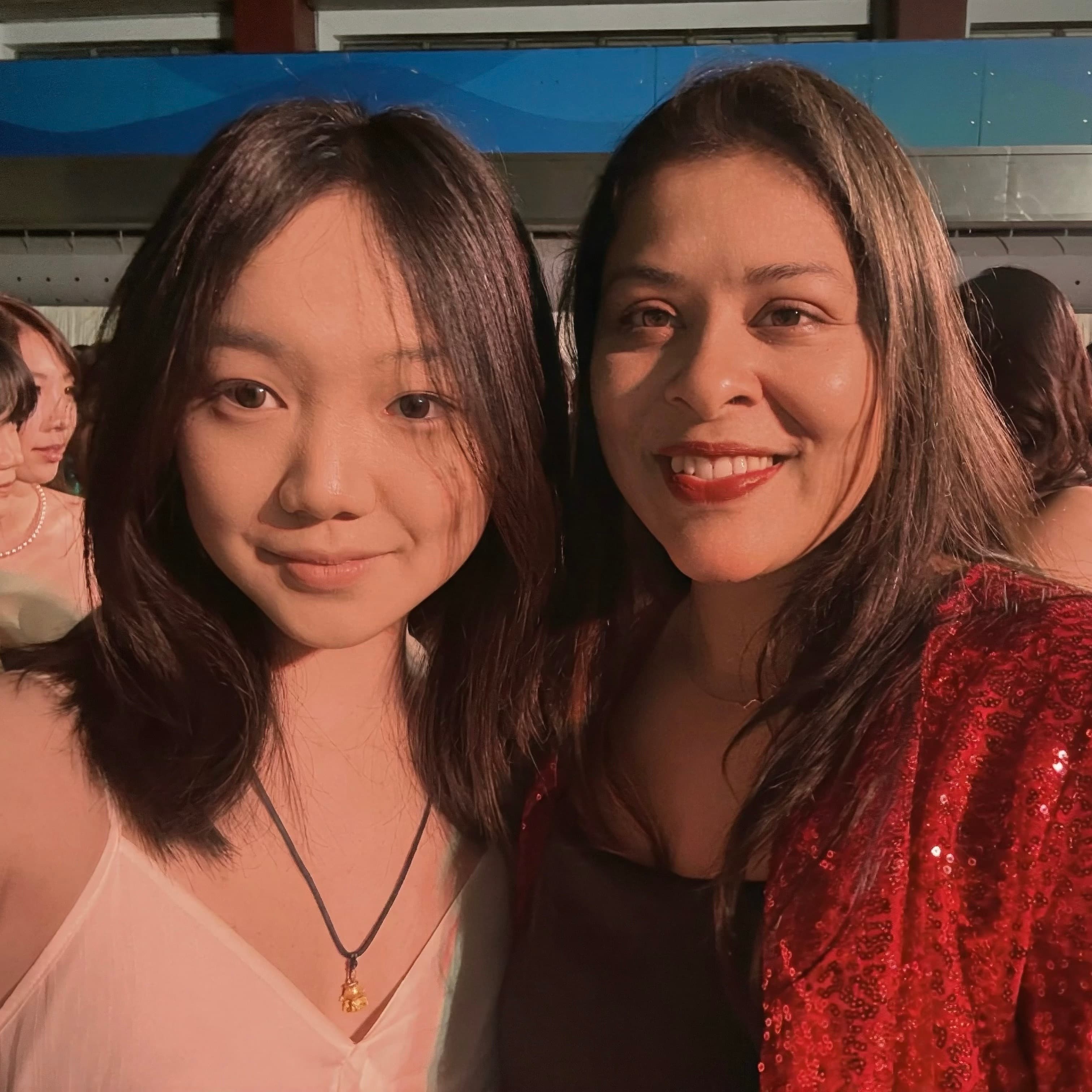
The best DT teacher
Shruti and me
Shruti's guidance throughout this DT journey — support that made all the late-night prototyping sessions worth it.
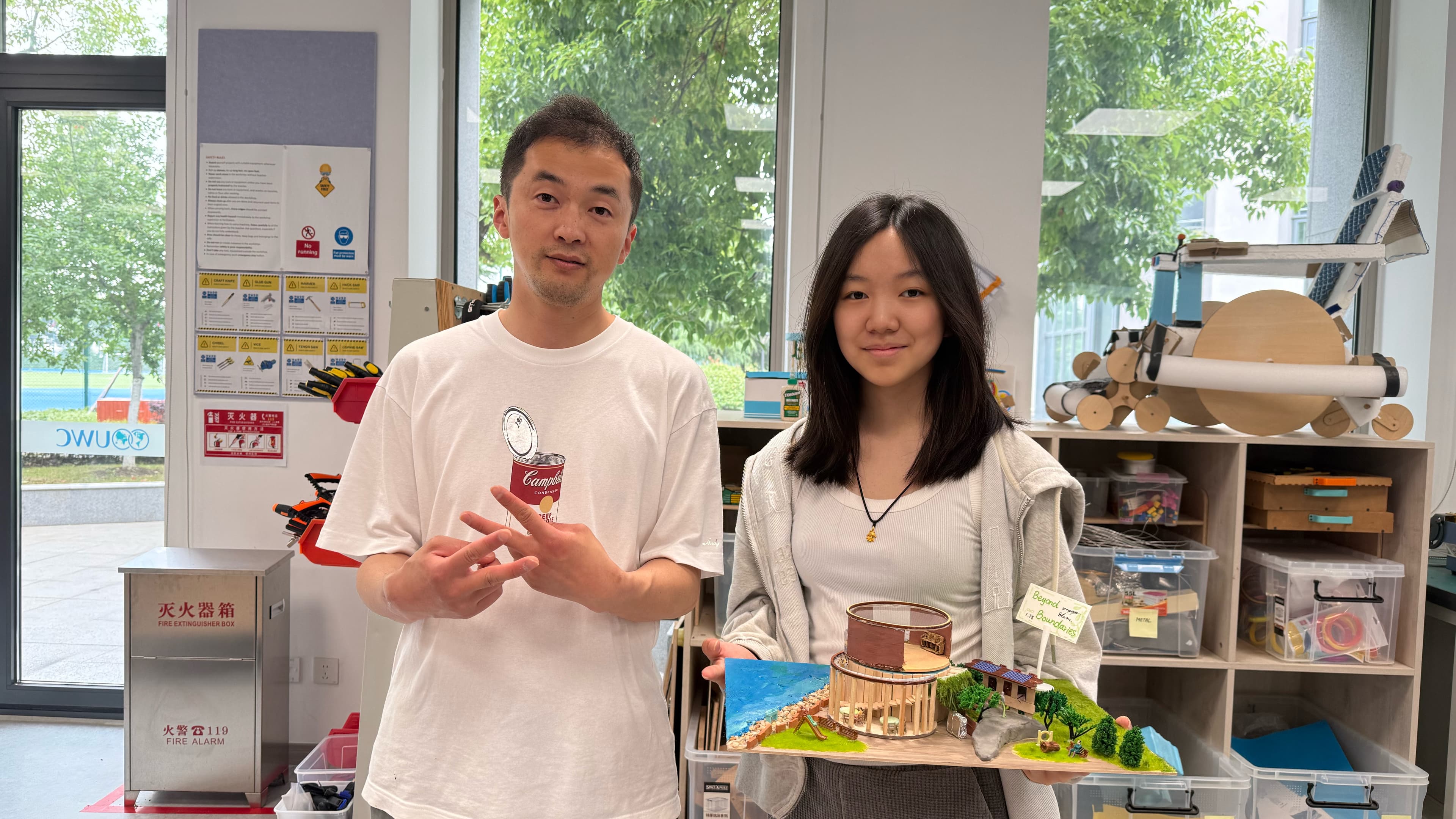
Lab technician
Jun and me
Jun guided me through every workshop tool and kept helping me print the 3D model.
Before this class, I hadn't touched fabrication, modeling, or prototyping. But over the past year, Design Technology turned into a journey of trial and error. I'd try out ideas, mess up, then rebuild, tweak, and slowly transform my notions into real stuff.
DT class has been one of the most rewarding parts of my Foundation Programme. From the very first introductory lesson to finalising complex projects, every week brought something new to learn and usually something to figure out when things get messy.
The best part of the class is the balance between creative freedom and technical discipline, and users' needs. In class, we came up with tons of ideas while still learning to appreciate materials and tools. This blend of creativity and discipline will stay with me.
The portfolio highlights not only the end products but also the journey – from researching to brainstorming, making prototypes, and getting feedback. I realized that failing and messing up are totally normal. In fact, every mistake – like botched 3D prints or ill-fitting pieces – ended up teaching me valuable lessons, way more than any perfect outcome would have.
How Each Project Is Structured
Every project in FP Design Technology follows a four-stage design cycle. Each page on this site is organised around these four criteria so you can see not just what I made, but how I thought through it.
Inquiring & Analysing
Research, empathise, and define the problem. Before any designing begins, I investigate the context, the user, and the need through desk research, interviews, and case studies.
Developing Ideas
Sketch, ideate, and develop original concepts. I explore multiple directions — moodboards, concept drawings, CAD models — before selecting and refining the strongest solution.
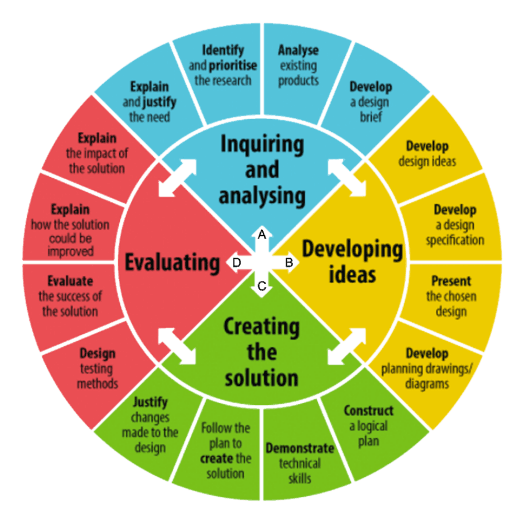
Creating the Solution
Build, prototype, and make. This is where the design becomes physical — through woodworking, 3D printing, laser cutting, soldering, or textile construction. I document every step, including the problems encountered.
Evaluating
Test, measure, and reflect honestly. I assess the finished product against success criteria using surveys, user trials, physical tests, and self-evaluation — and identify areas for improvement.
Skills Developed This Year
Fabrication
- Woodworking (hand saw, scroll saw, belt sander, pillar drill)
- Laser cutting
- 3D printing & CAD (Onshape)
- Soldering & basic electronics
- Foam sculpting & clay modelling
- Textile construction & batik dyeing
- Scale modelling (1:75)
Design Thinking
- User research & interviews
- Design brief writing
- Concept sketching & ideation
- Prototyping & iteration
- Evaluation & user testing
- Risk assessment